
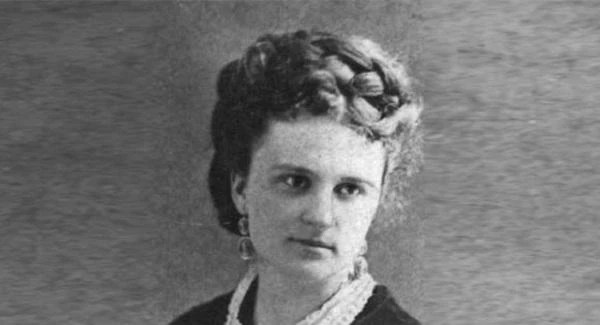
Kate Chopin’s novel The Awakening was released in 1899 (Wikipedia contributors). It relates a tragic tale of a woman who ‘awakened’ from the traditional demands of motherhood and pursued her ideal life, though she failed in the end. As one of the few works focused on women’s problems, The Awakening became a milestone in the early feminist movement (Williams). In this work, we can feel its literary value through Chopin’s mature writing skills as well as analyse the plot from a sociological perspective.
The initial chapters begin with a narrative about Léonce and Edna Pontellier. The two are a couple who appear to be comfortable and close but, in actuality, have very loose emotional bonds. Their marriage ‘was purely an accident’. At the beginning of the story, Chopin sketches Léonce with the symbols of ‘cigar’, ‘exclamation’, and ‘lazily’, which demonstrate his hegemonic masculinity as a successful businessman, and his ‘returned to his wife with the information that Raoul had a high fever and needed looking after’ shows us Edna’s complicit femininity as a housewife, who ‘liked money as well as most women and accepted it with no little satisfaction’. In Parsons’ views, this division between the instrumental (working outside as breadwinner) role of man and the expressive (considering needs within the domestic realm) role of woman satisfies society’s needs as it maximises the efficiency for each individual to carry out their tasks (Parsons). However, in the end, Edna no longer tolerates the oppressive division of labour. She feels a ‘vague anguish’ like a’shadow’. She longs for ‘soul’s summer day’ but is tormented by the ‘mosquitoes’ of real life.
It is not until Edna meets Robert Lebrun that she begins the journey of escaping from the conventional gender constraints and starts ‘awakening’ She is no longer satisfied with a marriage that has no real connection but instead strives to pursue her desire for love. It is worth noting that Edna and Robert fall in love with each other on the beach, and the imagery of ‘sea’ is used throughout the work. In literature, the ‘sea’ is a place full of hope and unlimited possibilities. However, it is also dangerous and limited (Kobeleva et al.), just like Edna and Robert’s ‘forbidden’ love. As Edna and Robert fall in love, Robert finds an excuse to run away from the relationship, with tragic results.
In Chapter 10, Chopin’s use of the imagery of “sea” is even more worth savouring. Here, Edna seems to have made up her mind. She ‘wanted to swim far out, where no woman had swum before’, even if a ‘quick vision of death smote her soul’. This also sets the scene for her complete transformation from caring for her family to focusing on herself in the following section. Nonetheless, it is not an easy task, as Robert’s line ‘You were not so very far, my dear; I was watching you’ seemed to be a genuine care, but in actuality, it may be an allusion to society’s gaze and restrictions on women wrapped up in ‘care’. Just as Edna attempts to say farewell to her past once and for all by destroying her wedding ring in Chapter 17, she loses her courage amid the maid’s enquiry and does not escape from others’ eyes.
In the process, Edna meets several critical individuals, including Madame Adèle Ratignolle and Mademoiselle Reis. The former is a virtually ‘perfect’ woman (‘There are no words to describe her save the old ones that have served so often to picture the bygone heroine of romance and the fair lady of our dreams.’); she was the model housewife of her time: loving her husband, taking care of the household, and even ‘helping’ Edna to give up her unrealistic fantasies (‘I only ask for one:let Mrs. Pontellier alone’). The latter ‘quarrelled with almost everyone’ who ‘did not want to know her at all’ but had an unrivalled talent for the piano, rebelling against society’s directions. Edna and she not only understood each other mutually (‘You are the only one worth playing for. Those others? Bah!’), but she was the model for Edna on her way of ‘awakening’.
Gradually, Edna ‘began to feel like one who awakens gradually out of a dream, a delicious, grotesque, impossible dream’. She commenced developing an intimate relationship with Robert, living alone, planting plants, and learning to paint after he left. Nevertheless, this attitude arguably aroused the suspicion of others, as when Léonce Pontellier then sought the help of a doctor to find out if his wife was ‘abnormal’. Even so, Léonce is criticised for being ‘too lenient’ by the task most representative of patriarchy in the text, Edna’s father. This embodiment of traditional values emphasises the idea that ‘Put your foot down good and hard; the only way to manage a wife’ and uses this idea to get his wife killed.
Notably, Edna’s entanglement of soul and physical longing is also a highlight of the text. If Robert Lebrun symbolises Edna’s youthful and sizzling heart, Alcée Arobin, who takes advantage of the situation after he has gone, marks the surfacing of Edna’s carnal cravings. As a kind of ‘substitute’ for Robert, Alcée, despite her resemblance to him, never satisfies Edna’s deepest desires. This similar plotting technique was also utilised by Kenneth Hsien-yung Pai in his novel collection Taipei People (Ouyang). The difference is that Pai uses this contrast to show the misery of things being different temporally, while Chopin uses it to express the powerlessness of a little figure in his confrontation with reality. Unfortunately, in the end, Robert chose to leave in desperation. Perhaps he was just simply fed up with the relationship, but more likely, he did not want Edna to go deeper into public opinion because of their relationship.
Beyond the main stem of the plot, we can also identify some reflections of 19th-century society from some details. For instance, when men are approaching, Edna and Adèl, who were just chatting relaxingly, at once rose and began to shake out their draperies and relax their muscles’. This illustrates their conformity to the ‘social script’, which is the internalised contextual requirements and expectations set by society (Meng). In this case, the desirable woman figure in the 19th century was supposed to be subservient to and elegant in front of her male counterpart (Encyclopedia.com). Meanwhile, when Edna first began to switch the focus of her life, Léonce ‘thought it very discouraging that his wife, who was the sole object of his existence, evinced so little interest in things which concerned him, and valued so little his conversation.’ From a functionalist perspective, this can be explained by the ‘warm bath theory’, which is when a man’s family provides him with pressure relief, just like a warm bath (Parsons). In this context, Edna’s rejection can be seen as the ‘dysfunction’ of family and consequently led to her husband’s frustrations.
Even though some plots of The Awakening are inspiring yet touching, the author, Kate Chopin, had an unpleasant life. Just like Edna’s suicide at the end of the story, Chopin suffered from various health issues and problems with interpersonal relationships until she died (Toth). Perhaps, behind the macro perspective of critics linking The Awakening to the feminist movement, Chopin’s use of the novel to express her desires and expectations, which are socially repressed, is at the core of the whole text. Living in the conservative nineteenth century, Chopin struggled to raise a family and children, and the death of her husband left her mentally ill (Ewell). In this context, she employed her pen to project her ideals onto the character Edna.
Unfortunately, Chopin was well aware of the social suppression of female independence at the time. This may be the reason why she ended the story on a tragic note and later abandoned writing. This is evident from the fact that The Awakening was massively criticised and even banned at the time of its publication. The press could not accept the advanced concepts in the book and even used the extreme term ‘poison’ to describe them (Franklin).
As Mademoiselle Reis says in the story, ‘The bird that would soar above the level of tradition and prejudice must have strong wings.’ No matter what era, women who dare to stand up for their rights are sturdy birds. Even though Edna, the ‘bird’ in The Awakening, did not reach the sky she wanted, she showed a spirit everyone should learn from. Through the countless Ednas, women can take back the power that is rightfully theirs.
Bibliography
Toth, Emily. “Emily Toth Thanks Kate Chopin.” The Women’s Review of Books, vol. 16, no. 10/11, JSTOR, July 1999, p. 34. Crossref, https://doi.org/10.2307/4023250.
Ewell, Barbara. “Biography, Kate Chopin, the Awakening, the Storm, Stories.” KateChopin.org, 20 Aug. 2023, http://www.katechopin.org/biography.
Franklin, Benjamín. Research Guide to American Literature. Annotated Edition, vol. 1, Infobase Publishing, 2010.
Parsons, Talcott. The Social System. 2nd ed., Routledge, 1991.
Kobeleva, Ekaterina V., et al. The Sea in the Literary Imagination. Cambridge Scholars Publishing, 2019.
Williams, Christina. “Reading Beyond Modern Feminism: Kate Chopin’s the Awakening.” The Oswald Review, vol. 10, 2008,
Ouyang, Zi. 王谢堂前的燕子: 白先勇《台北人》的研析与索隐. China, Guangxi Normal UP, 2014.
Meng, Hongdang. “Social Script Theory and Cross-cultural Communication.” Intercultural Communication Studies, vol. 17, no. 1, 2008, pp. 132–38. www-s3-live.kent.edu/s3fs-root/s3fs-public/file/14-Hongdang-Meng.pdf.
Encyclopedia.com. “Women in the 19th Century: Introduction.” Encyclopedia.com, http://www.encyclopedia.com/social-sciences/encyclopedias-almanacs-transcripts-and-maps/women-19th-century-introduction. Accessed 11 Feb. 2024.
Parsons, Talcott. The Social Structure of the Family. 1949.
Wikipedia contributors. “The Awakening (Chopin Novel).” Wikipedia, 3 Feb. 2024, en.wikipedia.org/w/index.php?title=The_Awakening_(Chopin_novel).






 The Mono Archive
Leave a comment