
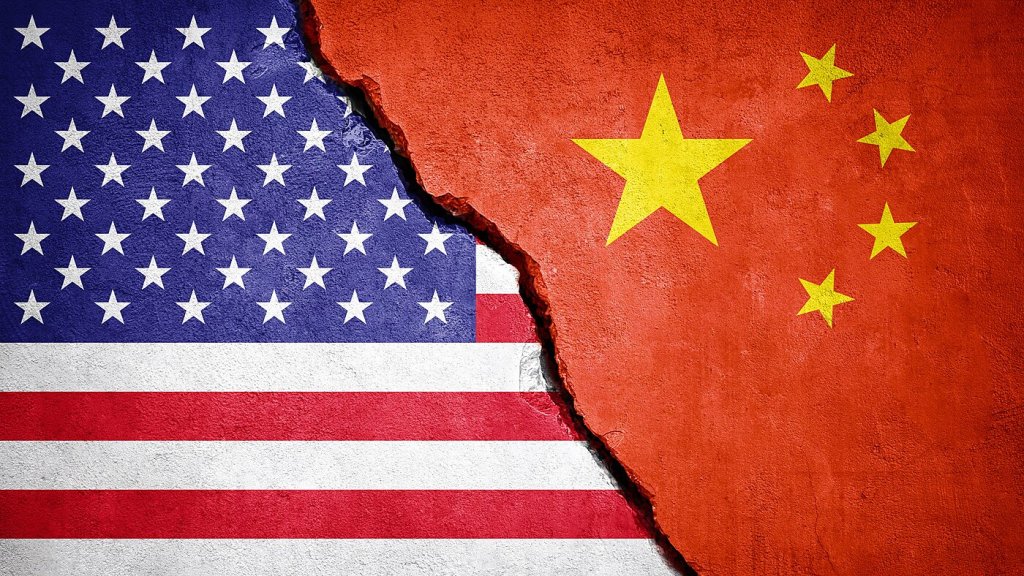
The quadrennial U.S. election has just come to a close, and for Democrats, it is a moment to be excited. Donald J. Trump, who has been constantly promoting his ‘Make America Great Again’ agenda, won the election in a way the opinion poll failed to anticipate (Maddaus). Meanwhile, across the ocean in the People’s Republic of China (in this essay, Macao and Hong Kong SAR are excluded from the discussion), multiple incidents of hatred and victimisation against expats continue to occur (Dragonfly Intelligence). In those two seemingly unrelated incidents, nationalism played similar roles in the two countries. Nationalism can be defined as an ‘ideology based on the premise that the individual’s loyalty and devotion to the nation-state surpass other individual or group interests’ (Kohn), and it can yield a complex in which the citizens of a nation isolate themselves from the wider world. The U.S. and the P.R.C. are driven by nationalism to different extents, but citizens’ national identities tend to be dissimilar.
As for the People’s Republic of China, nationalism is profoundly rooted in the Communist Party’s political agenda and education. This leads to a situation in which most Chinese citizens’ perceptions and emotions towards other countries do not reflect their own opinions but are more likely to be driven by zhu xuan lyu, the invigoration of national spirit and pride defined by the governing party (Fan). The initiation of P.R.C.’s nationalism can be traced back to 1949. At that time, Mao Zedong’s dictatorship and cult of personality employed nationalist ideologies to unify Chinese Nationals and rationalise the legitimacy of the Chinese Communist Party. That attempt to bind the various ethnic groups within China and separate them from the rest of the world has persisted. For instance, military training in modern Chinese universities is described as ‘Course Nationalism 101’ by Sui, as those sessions are becoming fiercely ideological. Admittedly, the nationalist complex partially contributed to P.R.C.’s economic growth as the local firms tend to be engaged in ‘comparison or competition with other nations’ (Yarrow and Wu) hence function more effectively. Nevertheless, growth at the expense of human rights and international interactions will eventually find a backlash, as seen in the withdrawal of foreign companies from the P.R.C. under Xi Jinping’s rule (Bloomberg).
In addition, even if the P.R.C.’s ‘Great Firewall’ has blocked its nationals from accessing international social media platforms (e.g. Twitter, YouTube), it can still be observed that on those platforms, there are still a lot of remarks in Simplified Chinese about the exclusion of other countries and the promotion of the P.R.C.’s political systems. Those are commonly known as ‘The Fifty-Cent Army’, which is somewhat directly funded by the P.R.C. government (Han). Those various practices ultimately resulted in the tragedy that the hate against the countries (especially the U.S. and Japan) is on the rise. Hence, it can be summarised that even if nationalism in the People’s Republic of China did facilitate its development in the early days, its actionable and viral nature is leading the social climate of the P.R.C. to certain extremes. On the other hand, the nationalist practices in the United States also play significant roles in American society.
In the United States, even if its nationalism has also existed extensively, its origin and effects are distinct from those in the People’s Republic of China. Indeed, some researchers consider the United States ‘one of the most enthusiastically nationalistic countries of the world’ (Fuller), but the country’s multiethnic nature uniquely incorporates its nationalism. In 1776, the thirteen American colonies cut their connections to Great Britain and officially gained independence (Office of the Historian, Foreign Service Institute). Since then, nationalism has slowly developed based on a sort of ‘independent spirit’. The tragic experience of war and independence also embeds loyalty, liberality and universal political ideals in the U.S.’s nationalism. Some researchers reckon American nationalism has a democratic nature and can benefit the country by uniting individuals (Lowry); some regard it as a government-driven complex that may harm the harmony between various ethnicities in the U.S. (Nowrasteh).
Unlike the mono-ethnic P.R.C., nationalism in the multiethnic U.S. sometimes played negative roles within the country but between different ethnicities. According to Bonikowski and DiMaggio, a group of American nationals known as ‘ardent nationalists’ hold the idea that ‘true Americans’ must believe in Christianity or be born in the country, and this results in the superiority of Americans with Anglo-Saxon origins over other groups such as Jews. Those factors finally catalysed the success of Donald J. Trump’s ‘MAGA’ agenda, which addresses the idea that ‘the United States was once a ‘great’ country but has lost this status owing to foreign influence, both within its borders and without. (Volle)’. Trump’s policies, such as restricting immigration and increasing tariffs, reflect the expansion of nationalism and protectionism in the United States. Therefore, it can be inferred that nationalism in the U.S. is also gradually becoming ‘toxic’ and pushes the country into the realm of isolation. Consequently, the nationalist complexes in the U.S. and the P.R.C should be a part of the national identity of the citizens.
National identity can be defined as an individual’s sense of belonging to one or more states/nations (Ashmore et al. 74–75). In the People’s Republic of China, its national identity can be state-centred, Han-centred, and heavily shaped by the governing party. In the Communist Party’s political propaganda, the P.R.C. is usually portrayed as a country with over 5,000 years of history. This gives the Chinese nationals confidence in the extensive history of their country and nation. However, in actuality, the People’s Republic of China was not proclaimed until 1949, which is less than 100 years in 2024. This act of binding and confusing one regime with others that have existed in the land creates nationalism and makes many Chinese hateful towards the West (Stanford Center on China’s Economy and Institutions), as the latter was sometimes regarded as ‘brutal’ and ‘uncivilised’. Meanwhile, Chinese nationals heavily base their identity on Confucianism (or Ruism), an ideology promoting harmony and obligations as a group (Berling). This results in the prevalence of collectivism in contemporary Chinese society. The collectivist values are applied in various social institutes, such as families (Tim and Wong). Therefore, Chinese nationals are more likely to view their country and collective groups as the core of their national identity, while the American nationals are prone to identify their relationship with their country more individualistically.
In the United States, since it is predominantly constructed immigrants, its nationals’ identities are more likely to be less centralised to a particular culture. As Dawkins pointed out, the U.S. was ‘constructed by individuals who built political institutions informed by political theory; it’s a country built upon ideas rather than ancestry.’ This uniqueness leads to the situation that the national identities of Americans can differ among different ethnic groups because there is no common ancestor or culture. For example, in some areas of the United States where whiteness is set to the default, ethnic minorities form distinct communities of their own, thus distinguishing themselves from the ‘standard American image’ and thus retaining their own ethnic culture. Some research even suggested that the American identity of ethnic minorities may be dined sometimes, especially by European Americans (Devos and Mohamed). However, American society is more tolerant of different cultures than the P.R.C. Individuals are more free and open in interpreting their identities and citizen-country relationships. In such a ‘melting pot’, the culture and identity of the country are more inclined to change and evolve rather than remain static.
In summary, the nationalist ideologies in the United States and the People’s Republic of China are similar in certain aspects. For example, people’s sense of belonging and dependence on the state is stimulated and emphasised. Nevertheless, they are practised in a more extreme way in the P.R.C., resulting in the differences in the national identities of the two countries’ citizens. While Chinese nationals’ national belongingness is based on their relationship with other countries, American citizens’ ethnic distinctiveness conquers the greater portion of their national identities. Accordingly, in the future, their distinct cultures may significantly impact a tug-of-war between countries.
Works Cited
Ashmore, Richard D., et al. Social Identity, Intergroup Conflict, and Conflict Reduction. Oxford UP, USA, 2001.
Berling, Judith. “Confucianism.” Asia Society, asiasociety.org/education/confucianism. Accessed 19 Nov. 2024.
Bloomberg. “Foreign firms pull more money from China’s slowing economy.” Fortune, 10 Nov. 2024, fortune.com/2024/11/10/china-economy-growth-slowdown-foreign-investment-donald-trump-xi-jinping.
Bonikowski, Bart, and Paul DiMaggio. “Varieties of American Popular Nationalism.” American Sociological Review, vol. 81, no. 5, 2016, pp. 949–80, scholar.harvard.edu/files/bonikowski/files/bonikowski_and_dimaggio_-_varieties_of_american_popular_nationalism.pdf.
Dawkins, Ryan. “One American Identity, Two Distinct Meanings.” Bruce D. Benson Center for the Study of Western Civilization, http://www.colorado.edu/center/benson/western-civilization/summer-institute/summer-institute-essays/one-american-identity-two-distinct. Accessed 19 Nov. 2024.
Devos, Thierry, and Hafsa Mohamed. “Shades of American Identity: Implicit Relations between Ethnic and National Identities.” Social and Personality Psychology Compass, vol. 8, no. 12, Dec. 2014, pp. 739–54, doi:10.1111/spc3.12149.
Dragonfly Intelligence. “China | Lone Actor Attacks on Foreign Nationals.” Dragonfly Intelligence, 30 Sept. 2024, dragonflyintelligence.com/news/china-lone-actor-attacks-on-foreign-nationals. Accessed 18 Nov. 2024.
Fan, Xu. “Heroes Coming.” Chinadaily.com.cn, 14 Sept. 2017, http://www.chinadaily.com.cn/a/201709/14/WS59bb40d1a310d4d9ab7e1936_2.html. Accessed 18 Nov. 2024.
Fuller, Graham. “America’s Uncomfortable Relationship With Nationalism.” Stanley Center, July 2006, stanleycenter.org/publications/americas-uncomfortable-relationship-with-nationalism. Accessed 18 Nov. 2024.
Han, Rongbin. “Manufacturing Consent in Cyberspace: China’s ‘Fifty-Cent Army.’” Journal of Current Chinese Affairs, vol. 44, no. 2, June 2015, pp. 105–34, doi:10.1177/186810261504400205.
Kohn, Hans. “Nationalism | Definition, History, Examples, Principles, and Facts.” Encyclopedia Britannica, 21 Oct. 2024, http://www.britannica.com/topic/nationalism.
Lowry, Rich. The Case for Nationalism: How It Made Us Powerful, United, and Free. HarperCollins, 2019.
Maddaus, Gene. “Election Results 2024: Donald Trump Declared Winner of Presidential Race.” Variety, 6 Nov. 2024, variety.com/2024/politics/news/election-results-2024-kamala-harris-donald-trump-polls-close-1236201730. Accessed 18 Nov. 2024.
Nowrasteh, Alex. “The Case for Nationalism: How It Made Us Powerful, United, and Free.” Cato Journal, May 2022, pp. 574–82, http://www.cato.org/sites/cato.org/files/2020-05/cj-v40n2-21.pdf.
Office of the Historian, Foreign Service Institute. “Milestones in the History of U.S.” Office of the Historian, history.state.gov/milestones/1776-1783/declaration. Accessed 18 Nov. 2024.
Stanford Center on China’s Economy and Institutions. “How Do the Chinese People View the ‘West’? Divergence and Asymmetry in China’s Public Opinion of the U.S. and Europe.” Stanford Center on China’s Economy and Institutions, 1 June 2023, sccei.fsi.stanford.edu/china-briefs/how-do-chinese-people-view-west-divergence-and-asymmetry-chinas-public-opinion-us-and. Accessed 19 Nov. 2024.
Sui, Celine. “China’s Military Training Is All About Nationalism.” Foreign Policy, 25 Oct. 2019, foreignpolicy.com/2019/10/25/chinese-universities-nationalism-mainland-china-hong-kong.
Tim, Yui, and Edward Wong. The Chinese at Work: Collectivism or Individualism? Lingnan University, 2001, commons.ln.edu.hk/cgi/viewcontent.cgi?article=1030&context=hkibswp. Accessed 19 Nov. 2024.
Volle, Adam. “MAGA movement | Meaning, Beliefs, Origins, Donald Trump, and Facts.” Encyclopedia Britannica, 6 Nov. 2024, www.britannica.com/topic/MAGA-movement.
Yarrow, Richard, and Zeying Wu. “What lies between China’s nationalism and growth?” East Asia Forum, 16 July 2012, eastasiaforum.org/2021/07/16/what-lies-between-chinas-nationalism-and-growth. Accessed 18 Nov. 2024





 The Mono Archive
Leave a comment